Reading Time: 10 minutes
Hiring a hydro demolition subcontractor for public-sector infrastructure is, more than anything, a decision about risk. The asset might be a bridge deck, a transit structure, a water treatment plant, or an energy installation, and whatever it is, the owner answers for it to the public, to regulators, and for years after the work is done. While cost is always an important consideration, public-sector owners typically evaluate subcontractors on a broader combination of technical capability, safety, compliance, schedule confidence, and overall project risk. Underneath all of it sits one question: can this subcontractor be counted on once the job is live?
The answer comes from three things an owner can check: how the method works, what competent execution looks like on the ground, and whether the subcontractor is ready to be brought onto a public-sector job at all. The method is the easy part. The other two are where projects are won or lost.
Understanding the Method
Hydro demolition is often selected for concrete removal on structurally sensitive infrastructure because of how it works. Rather than breaking concrete through mechanical impact, it uses a high-pressure water jet, typically operating somewhere in the range of 15,000 to 40,000 psi, to exploit the weaknesses already present in deteriorated concrete. The water drives into existing pores and microcracks and fractures the weakened material from the inside, while denser sound concrete resists. Because pressure, flow, traverse speed, standoff distance, and pass count can be adjusted, the process can be tuned to support selective removal based on the condition and strength of the concrete. That selectivity is the whole point, and it is also why the choice of hydro demolition subcontractor matters as much as it does.
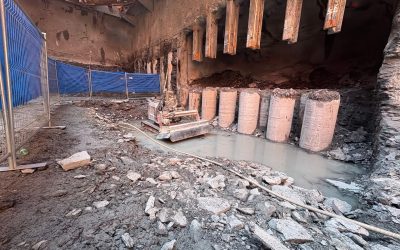
The selectivity produces a second benefit that mechanical methods cannot match. Because the process is non percussive, it does not induce the microfracturing, sometimes called bruising, that impact tools leave in the remaining concrete. It also leaves a rough, irregular surface profile with exposed aggregate, which is close to ideal for bonding a new overlay or repair material. The same water that removes the concrete cleans corrosion and laitance from the exposed reinforcing steel, which improves the bond conditions for the repair. On bridge decks and similar structures, that combination of a sound substrate and clean steel directly affects the durability of the repair, so the method is not only about what is removed. It is also about the quality of the surface left behind.
None of this is automatic. The same equipment can produce a clean, controlled result or an inconsistent one depending on how it is calibrated, monitored, and managed. That is the bridge to the two questions an owner actually has to answer during procurement: is this subcontractor operationally competent, and is it ready to be bought and relied upon? The rest of this guide takes them in that order.
Evaluating Operational Competence
Operational competence is what determines whether the method delivers its advantages on a specific structure. It shows up across a handful of areas, and a capable subcontractor should be able to speak to each in specific terms rather than generalities.
Safety Planning
Hydro demolition introduces hazards that differ from conventional demolition, and the safety plan has to reflect that. A water jet operating at 20,000 psi or more carries enough energy to cause severe injury on contact, which means exclusion zones, jet containment, and operator positioning are engineering decisions rather than generic site rules. The reaction force at the nozzle is also significant, and it is one reason robotic systems are used for sustained work instead of handheld lances. The plan has to account for the force the equipment generates, not just the surface being removed.
Beyond the jet itself, the plan should address the conditions the process creates: large volumes of water and slurry underfoot, reduced traction, electrical considerations around wet work, and the handling of removed concrete and water. On infrastructure sites these overlap with confined spaces, work at height, and other trades working nearby. A capable subcontractor produces a site-specific plan that maps these hazards to the actual structure and sequence of work rather than reusing a template. The reduction in vibration and silica dust exposure compared with jackhammering is a genuine advantage of the method, which we cover in our article on hydro demolition and worker safety.
When a subcontractor can explain how it sizes exclusion zones, manages nozzle reaction force, and controls the water and slurry generated on site, it is showing the kind of specific risk awareness public institutions should expect.
Engineered Work Methods
The defining technical decision in hydro demolition is calibration. Removal depth and selectivity are controlled by the combination of water pressure, flow rate, the speed at which the jet traverses the surface, the standoff distance between nozzle and concrete, and the number of passes. Adjusting these parameters lets the subcontractor target concrete below a particular soundness threshold while leaving stronger concrete in place. On a rehabilitation project, this is what allows deteriorated concrete to be removed to a defined depth around the reinforcing steel without damaging the steel or the sound substrate beneath.
On a bridge deck, a hydroelectric facility, or a tunnel, the consequences of an unconsidered approach can be significant, so the method should be the product of engineering judgment rather than a fixed default. A subcontractor should be able to explain how it arrives at its parameters for a given structure, and how it adjusts them as site conditions and the actual condition of the concrete are confirmed.
Water Management
Water management is one of the defining considerations of hydro demolition, and it’s where public-sector owners are most right to ask detailed questions. The water generated isn’t simply clean runoff. Contact with cement leaches calcium hydroxide into it, which can become highly alkaline. The actual pH level will depend on site conditions and must be confirmed through monitoring. The water also carries suspended solids from the pulverized concrete, and depending on the substrate and any contaminants present, it can pick up other constituents as well. Discharging it untreated, whether to a storm system, a municipal sewer, or a nearby watercourse, is both an environmental and a regulatory problem.
Managing it properly means treating it before discharge. Neutralization may be achieved through methods such as carbon dioxide injection or controlled chemical dosing, depending on the treatment system, site conditions, and discharge requirements, and suspended solids are removed through settling or filtration before the water is released or recycled. The acceptable thresholds for pH and suspended solids are set by the receiving system and the local authority, so they are confirmed per site rather than assumed. We go further into the environmental dimension of this in our piece on sustainable infrastructure rehabilitation in Ontario.
A subcontractor that can describe its treatment approach, the parameters it monitors, and how it confirms discharge requirements with the owner and the local authority is treating water management as the engineered problem it is, rather than an afterthought.
Equipment Readiness
The pressures involved put real demands on the equipment. High-pressure pumps, lances, hoses, nozzles, and seals all operate near the upper limit of what the components are rated for, and wear is continuous. A worn nozzle changes the shape and energy of the jet, which changes the removal result, and a degraded seal or hose at these pressures is a safety concern rather than a routine maintenance item. Equipment readiness in hydro demolition is therefore tied directly to both the quality of the work and the safety of the site.
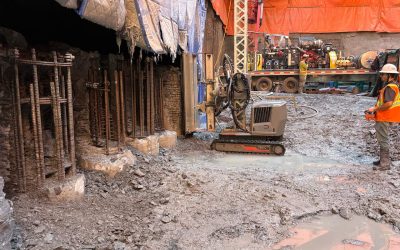
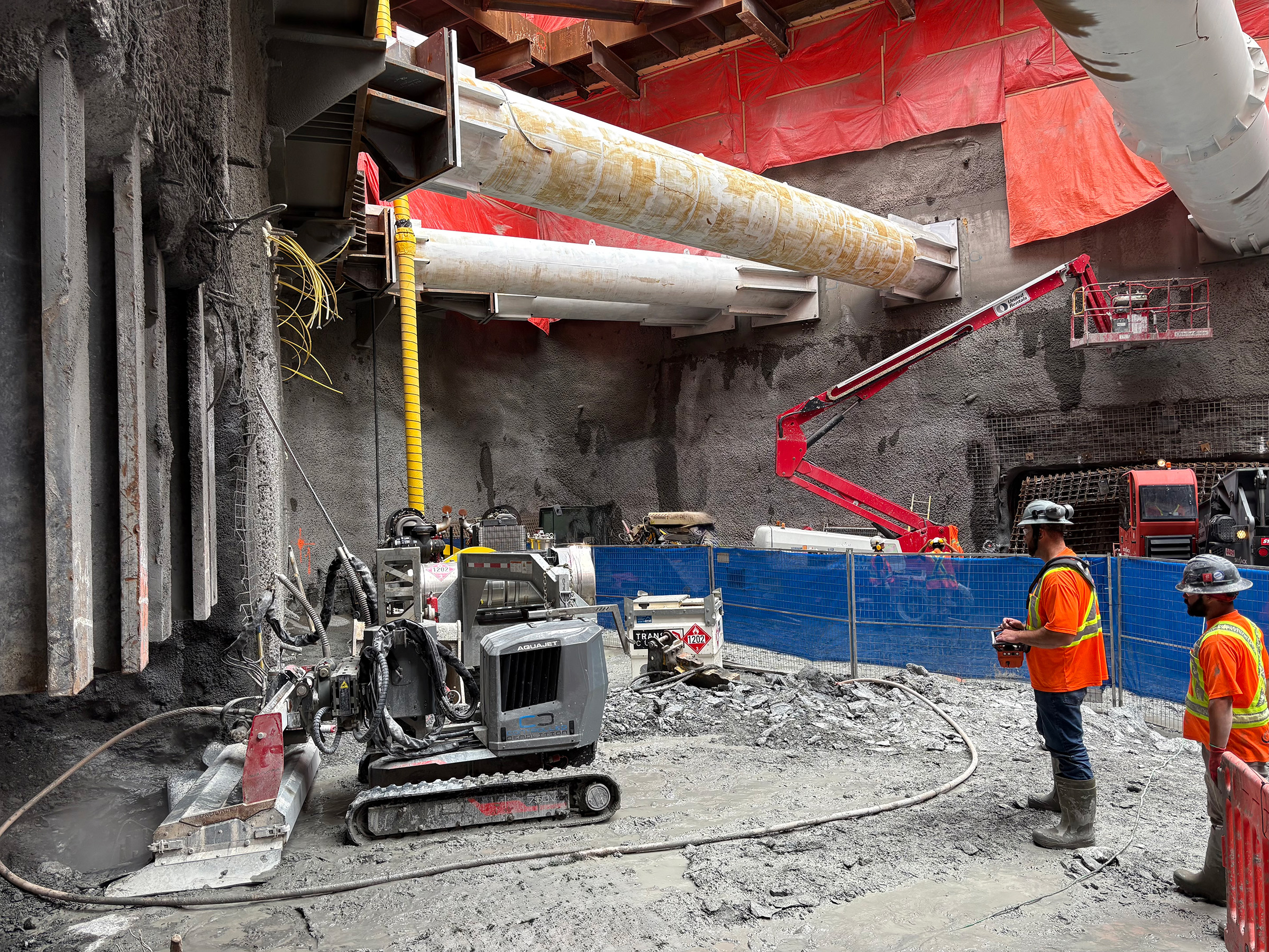
There is also a meaningful difference between handheld lance work and robotic systems. Robotic equipment manages the substantial reaction force of the jet, holds consistent standoff distance and traverse speed, and keeps the operator out of the immediate removal zone. That consistency is part of what makes selective removal repeatable across a large area, and part of what makes the work safer. A capable subcontractor maintains its high-pressure components to a consistent standard and selects equipment, robotic or otherwise, based on the demands of the specific scope rather than on what happens to be available.
Operator Competency
Even with a sound method and well maintained equipment, the result depends on operator judgment applied in real time. Concrete is not uniform, and the actual condition of a structure rarely matches the drawings exactly. An operator has to read the surface as the work proceeds, recognize when removal is approaching the reinforcing steel or the sound substrate, and adjust pressure, standoff, traverse speed, or the number of passes to hold the intended removal depth. Calibration set at the start of a shift is a starting point, not a fixed setting.
This is where the difference between an experienced operator and an inexperienced one shows up in the finished work. A skilled operator holds consistent removal across a varying surface, avoids overcutting into sound material, and protects the reinforcing steel while fully removing the deteriorated concrete around it. On public infrastructure, where the durability of the repair depends on a clean, sound, well profiled substrate, that judgment has a direct effect on the long term outcome.
Documentation
Documentation often distinguishes a subcontractor suited to public-sector work from one that is not. Public institutions are accountable for how decisions are made and how work is carried out, which means the supporting records are part of the deliverable rather than a formality. In hydro demolition specifically, several of the technical points above translate directly into records an owner may need: the site-specific safety plan, the engineered work method and its parameters, removal depth verification, the pH and suspended solids monitoring records from water treatment, the discharge confirmations agreed with the local authority, and a record of the areas and quantities removed. Taken together, these support the owner’s own reporting and accountability obligations and provide evidence that the work was carried out as intended and within the agreed environmental requirements.
Evaluating Procurement Readiness
Operational competence answers whether a subcontractor can carry out the hydro demolition itself well. Procurement readiness answers a different question, and it is the one that keeps owners and primes up at night: can this subcontractor actually be procured, onboarded, and relied upon on a public-sector infrastructure project? A firm can be technically excellent and still be difficult to procure if it cannot meet institutional requirements, cannot contribute to the engineering conversation, cannot define its scope cleanly, or cannot hold a schedule. This is where an owner learns whether a subcontractor understands not just the work, but where things tend to go wrong around it.
Prequalification and Institutional Readiness
Public-sector and large institutional projects usually carry prequalification requirements before a subcontractor can be engaged at all. These can include health and safety program standards, insurance and bonding thresholds, contractor registration and vendor management systems, and evidence of relevant experience on comparable infrastructure. A subcontractor that is ready in this sense already has these in order and can move through onboarding without becoming the bottleneck that delays a project start. For an owner, the signal to look for is a subcontractor that treats prequalification as routine rather than a scramble, because that readiness is a fair proxy for how it will handle the rest of the engagement.
Engineering and Constructability Collaboration
On complex infrastructure projects, a hydro demolition subcontractor should be able to contribute before the work reaches the field. Owners, engineers, and prime contractors benefit from early input on access constraints, temporary works, sequencing, containment, water management, equipment selection, removal limits, and interface with adjacent trades. This does not replace the role of the engineer of record or the construction manager, but it does help the project team test whether the proposed method is practical, controllable, and aligned with the project’s risk profile. A procurement ready subcontractor is one that can participate in these discussions clearly and constructively, helping the team identify execution constraints early rather than discovering them during mobilization.
Commercial Scope Clarity and Risk Allocation
A great deal of project risk is created, or avoided, in how scope is defined at the outset. On hydro demolition specifically, the areas that need clarity are usually removal limits and depths, how quantities are measured and confirmed, responsibility for water treatment and discharge, site access and coordination with other trades, and what happens when the concrete in the field turns out to be in worse condition than the drawings suggested. A ready subcontractor raises these questions early and helps define them clearly rather than leaving them to surface as disputes mid project. From the buyer’s side, the thing worth valuing is a subcontractor that wants the scope to be unambiguous, because that instinct protects the owner as much as the subcontractor.
Schedule Reliability and Production Planning
On infrastructure work, a subcontractor’s schedule rarely stands alone. Hydro demolition usually sits on a critical path ahead of rebar work, formwork, and the concrete repair that follows, so a slip in removal can ripple through the rest of the program. Production planning is what makes the schedule credible: a realistic view of achievable removal rates for the specific structure, the water treatment capacity to keep pace with production, contingency for variable concrete conditions, and honest sequencing around access and other trades. A subcontractor that can speak to its expected production, and to what would affect it, is far more reliable to build a program around than one that simply commits to a date. For the owner, that realism is worth more than optimism.
The Controlled Demolition Group Approach
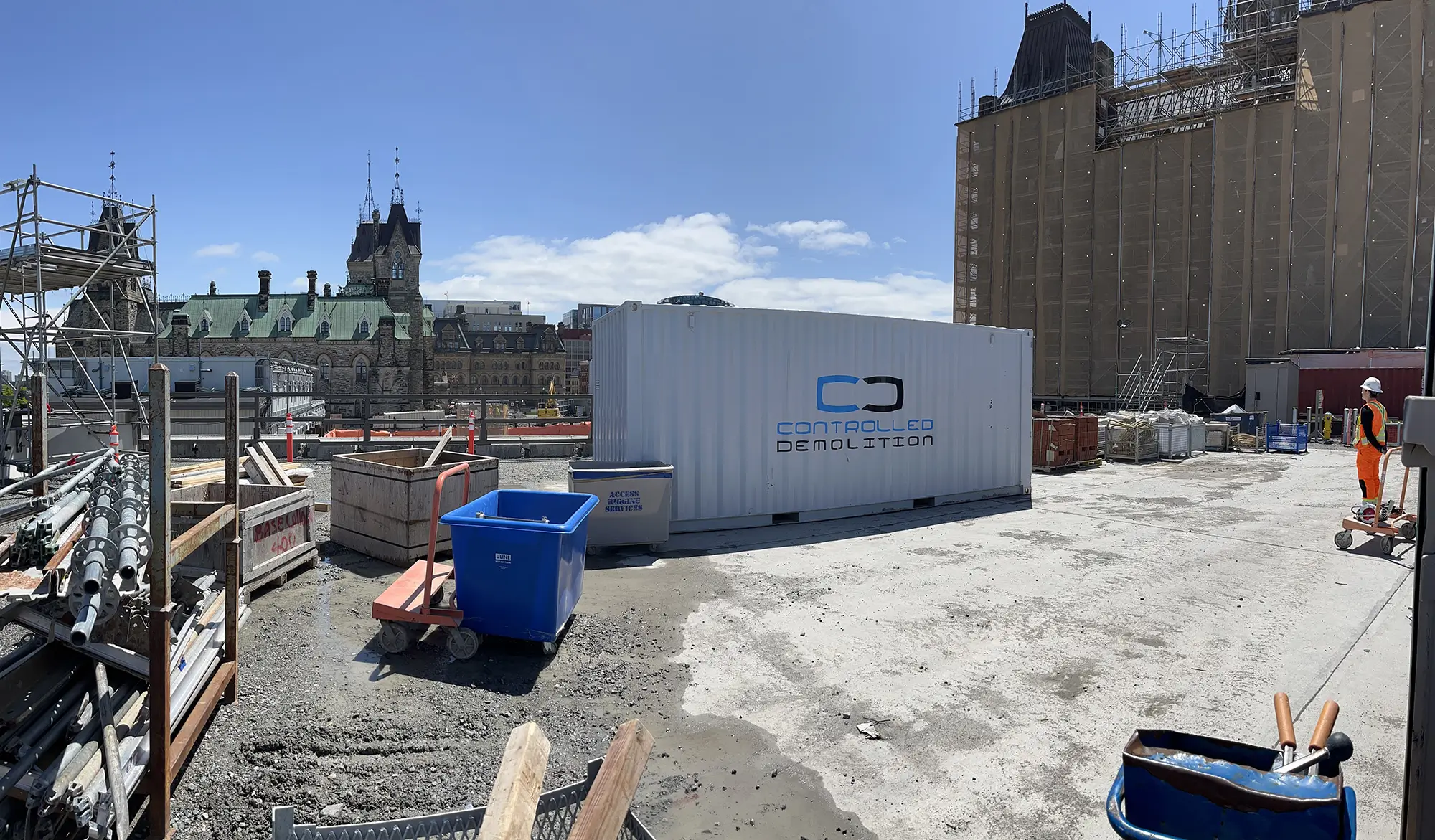
Controlled Demolition Group is a specialty infrastructure subcontractor focused on complex demolition and concrete rehabilitation work in sensitive environments. Our role is not simply to remove concrete. Our role is to help owners, engineers, and prime contractors execute difficult scopes with greater control over safety, structural protection, environmental management, and project risk.
Hydro demolition sits at the centre of that capability. CDGI combines robotic hydro demolition, remote-controlled demolition equipment, high-pressure water systems, and mobile water treatment and recycling support to deliver selective concrete removal for infrastructure where conventional impact methods may introduce unnecessary vibration, dust, access challenges, or risk to the remaining structure.
Our work is focused on mass concrete and public infrastructure environments, including bridges and bridge decks, hydroelectric facilities, tunnels and transit structures, water and wastewater facilities, parking structures, marine and waterfront infrastructure, industrial sites, and nuclear-adjacent work areas. These environments require more than production capacity. They require planning, coordination, documentation, and a subcontractor that understands how to work within large project teams and institutional owner requirements.
Water management is treated as part of the work, not as an afterthought. CDGI’s hydro demolition planning is supported by its Hydro Demolition Environmental Program, which considers containment, collection, treatment, recycling, discharge requirements, and site-specific environmental controls. Where required, the program brings mobile water treatment and recycling capability to the site to support responsible management of hydro demolition water on sensitive infrastructure sites.
CDGI is structured to integrate with the expectations of public-sector owners, major general contractors, construction managers, and engineering teams. That means project-specific work planning, safety coordination, equipment selection, operator competency, environmental planning, and documentation appropriate to the project.
The goal is straightforward: to be a specialty subcontractor that infrastructure owners and prime contractors can bring onto complex projects with confidence.
Final means, methods, water management, discharge controls, and execution plans are confirmed on a project-specific basis in accordance with owner requirements, site conditions, applicable regulations, and approved work plans.
Frequently Asked Questions
What pressure does hydro demolition use, and how does it avoid damaging sound concrete?
Hydro demolition typically operates with water pressure in the range of roughly 15,000 to 40,000 psi. The jet exploits the pores and microcracks in deteriorated concrete, fracturing the weakened material from within, while denser sound concrete resists. Because pressure, flow, traverse speed, standoff distance, and pass count can be adjusted, the process can be tuned to support selective removal based on the condition and strength of the concrete.
Can hydro demolition remove only deteriorated concrete?
Hydro demolition can be tuned to support selective concrete removal, which is one of its main advantages on rehabilitation projects. By adjusting pressure, flow rate, traverse speed, standoff distance, and the number of passes, the process can target weaker or deteriorated concrete while leaving denser, sound concrete intact. Actual removal limits depend on the condition of the structure, concrete strength, reinforcing layout, access, and the approved project-specific work plan. For that reason, selective removal should always be verified in the field through inspection, depth checks, and ongoing adjustment during the work.
Why does hydro demolition produce a better surface for repairs?
Because it is non percussive, it does not cause the microfracturing that impact tools leave in the remaining concrete. It also leaves a rough, irregular profile with exposed aggregate, which improves the bond between the existing concrete and a new overlay or repair material. On structures like bridge decks, that bond strength directly affects how durable the repair will be.
When is hydro demolition preferred over mechanical demolition?
Hydro demolition is often preferred where the remaining structure must be protected, where reinforcing steel needs to be preserved, or where the repair depends on achieving a clean, bond ready concrete surface. It is especially useful on bridges, decks, tunnels, hydroelectric structures, wastewater facilities, parking structures, and other infrastructure where impact methods may create vibration, dust, noise, micro fracturing, or damage to sound concrete and embedded steel. Mechanical demolition may still be suitable for some applications, but hydro demolition is typically considered when precision, structural protection, reduced vibration, worker safety, and repair quality are key project priorities.
How should an owner reduce risk when procuring hydro demolition?
Beyond confirming technical competence, an owner reduces risk by checking procurement readiness: whether the subcontractor meets prequalification and institutional requirements, whether it defines commercial scope and risk allocation clearly, and whether its schedule is backed by realistic production planning. A subcontractor that is strong on these is far easier to onboard and rely upon once the project is underway.
Does the water from hydro demolition need to be treated?
Usually, yes. Contact with cement can make the water highly alkaline, and it carries suspended solids from the removed concrete. Before discharge or recycling, the pH is typically neutralized through methods such as carbon dioxide injection or controlled chemical dosing, and suspended solids are removed through settling or filtration. The actual pH and the acceptable discharge thresholds depend on site conditions and are confirmed through monitoring and with the local authority.
What documentation should a hydro demolition subcontractor provide?
Depending on the project, documentation may include the site-specific safety plan, the engineered work method and parameters, removal depth verification, water treatment monitoring records such as pH and suspended solids, discharge confirmations with the local authority, and a record of the areas and quantities removed. These records support the owner's reporting and accountability obligations and should be scaled to the project and the owner's requirements.
Choosing the Right Partner
For public-sector infrastructure owners, choosing a hydro demolition subcontractor comes down to reducing risk on three fronts. The method has to be right for the structure, the execution has to be operationally competent, and the subcontractor has to be genuinely ready to be procured and relied upon. A firm that is strong on all three is one an owner can build a program around with confidence.
If you’re planning infrastructure rehabilitation work where safety, structural protection, environmental controls, and accountability are priorities, Controlled Demolition Group can support early planning discussions and help determine how hydro demolition may align with your project requirements.