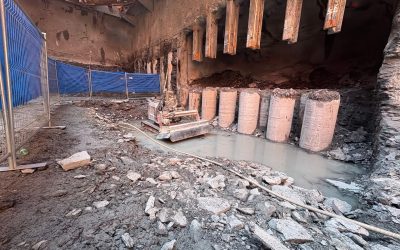
Not all concrete removal methods are suitable for critical infrastructure. In many rehabilitation projects, the challenge is not simply removing deteriorated concrete; it is removing it without compromising the structure that must remain. Bridges carrying live traffic, hydroelectric dams operating under constant load, transit tunnels beneath major cities, and industrial facilities supporting essential operations all share one requirement: structural sensitivity.
In these environments, traditional demolition methods can introduce vibration, uncontrolled cracking, and potential damage to embedded structural steel. Hydro demolition provides a more controlled alternative. At Controlled Demolition Group (CDG), hydro demolition is frequently selected for infrastructure projects across Toronto, the Greater Toronto Area (GTA), and throughout Ontario where precision concrete removal and structural preservation are critical.
Why Non-Invasive Concrete Removal Matters
Traditional mechanical demolition relies on impact tools such as breakers and jackhammers. While effective for breaking concrete, these tools transmit vibration through the structure and can introduce unintended microcracking or damage to reinforcing steel.
Hydro demolition works differently.
Using ultra-high-pressure water, the process fractures the cement matrix while leaving embedded structural steel intact. Because it is non-impact, the method avoids vibration-related damage and allows contractors to remove only the concrete that must be removed. For infrastructure rehabilitation projects, this level of control is essential.
Bridge Deck Rehabilitation
Bridge decks are one of the most common applications for hydro demolition. In many cases, engineers require the removal of deteriorated concrete while preserving reinforcing steel and sound concrete beneath. Traditional impact methods can bend rebar or create microcracks beyond the removal area. Hydro demolition allows contractors to remove concrete to precisely controlled depths, exposing reinforcing steel without damaging it. The process also creates a clean, roughened surface that improves bond strength for new concrete overlays. Across Ontario’s transportation network, hydro demolition is widely used to support long-lasting bridge deck rehabilitation projects.
Hydroelectric Dams and Spillways
Hydroelectric facilities often operate in environmentally sensitive areas and rely on massive concrete structures designed to carry significant loads. When concrete rehabilitation is required on dam faces, spillways, or intake structures, protecting embedded structural steel and maintaining structural integrity is essential. Hydro demolition allows controlled removal of deteriorated concrete without introducing vibration into the structure. Combined with water management and recycling systems, the method also supports responsible work practices in environments where protecting surrounding waterways and ecosystems is critical.
Transit Tunnels and Underground Infrastructure
Tunnel structures present unique challenges: access is limited, ventilation must be carefully managed, and vibration from demolition activities can affect surrounding infrastructure. Hydro demolition is well suited to these conditions because it produces minimal vibration and virtually no airborne dust compared to traditional demolition methods. For transit infrastructure projects in urban environments such as Toronto, this controlled removal method allows contractors to rehabilitate concrete tunnel linings while minimizing disruption to surrounding structures.
Industrial Equipment Foundations
Industrial facilities frequently require the modification or removal of equipment foundations while the surrounding plant remains operational. In these environments, demolition methods must be carefully controlled to avoid damaging adjacent equipment, structural supports, or sensitive systems. Hydro demolition provides a precise removal method that allows contractors to break down concrete foundations without introducing unnecessary vibration or structural disturbance. This makes it particularly valuable in operational industrial environments where safety and control are paramount.
When Engineers Specify Hydro Demolition
In structurally sensitive infrastructure projects, hydro demolition is often specified when protecting existing structural components is as important as removing deteriorated concrete. Engineers frequently select hydro demolition when project conditions require:
- Preservation of embedded reinforcing steel during concrete removal
- Minimal vibration to protect surrounding structural elements
- Controlled removal depths for bridge deck rehabilitation or structural repairs
- Reduced dust and silica exposure in urban or enclosed environments
- Environmentally responsible demolition methods near waterways or hydroelectric facilities
Because hydro demolition removes concrete selectively while maintaining the integrity of reinforcement and surrounding material, it is often the preferred removal method for rehabilitation projects involving bridges, dams, tunnels, and other critical infrastructure.
A Controlled Approach to Infrastructure Rehabilitation
Across bridges, dams, tunnels, and industrial facilities, the common requirement is the same: remove deteriorated concrete without introducing new structural risk. Hydro demolition provides the precision required to meet that challenge. By preserving reinforcing steel, minimizing vibration, and allowing controlled removal depths, the method supports long-lasting infrastructure repairs.
At Controlled Demolition Group, hydro demolition is part of our broader approach to infrastructure rehabilitation—combining specialized equipment, experienced crews, and controlled removal methods to deliver reliable results on complex projects across Toronto, the GTA, and Ontario.