
Controlled Removals
Robotic Hydro Demolition is a highly productive and efficient method of concrete removal. Using a robot to direct and apply the high pressure water to the removal surface, the motion of the high-pressure water jet is controlled, rapid, and precise. Poor concrete is removed, while sound concrete will remain.
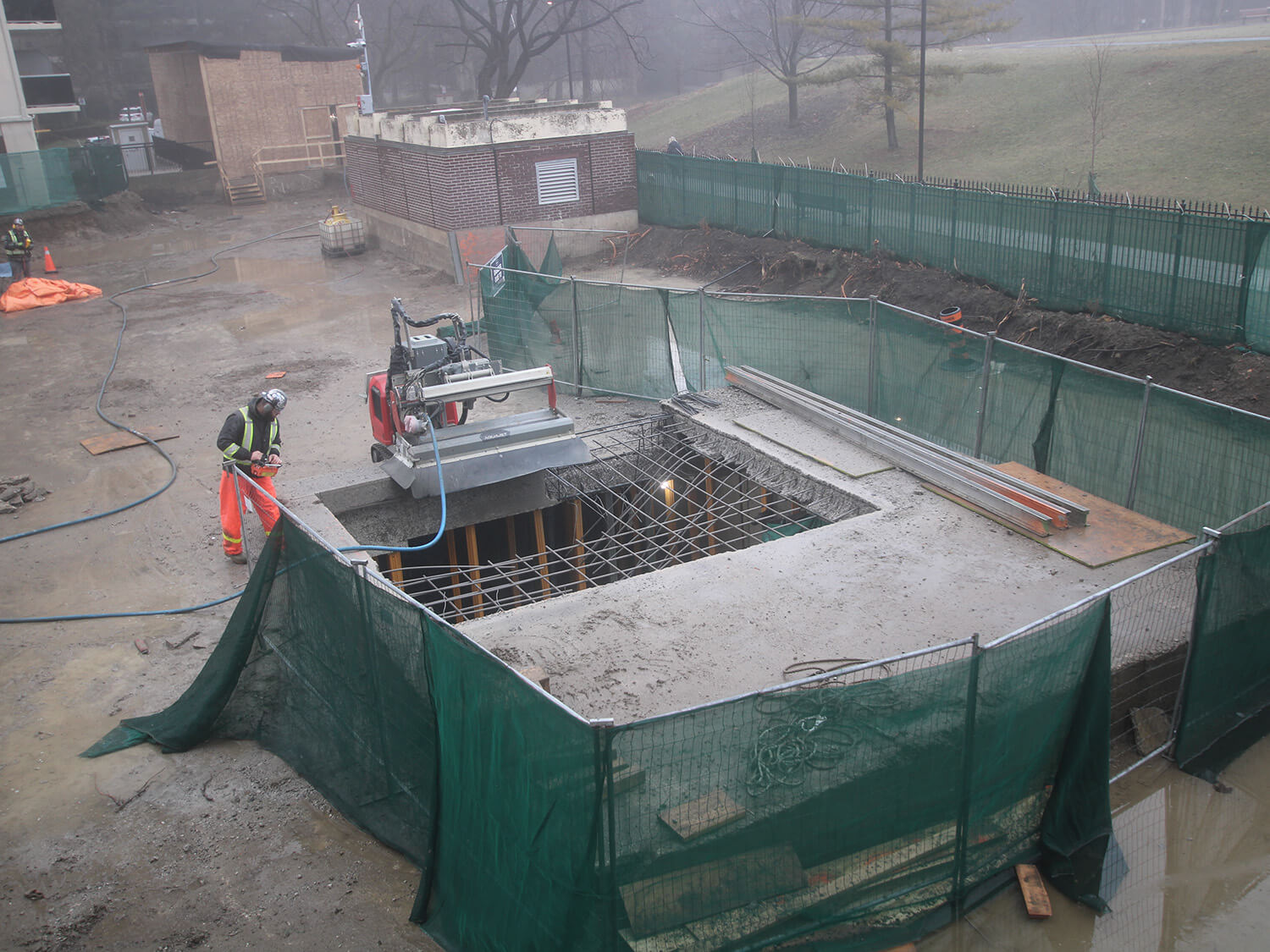
No Impact, No Vibration, & Dust Free
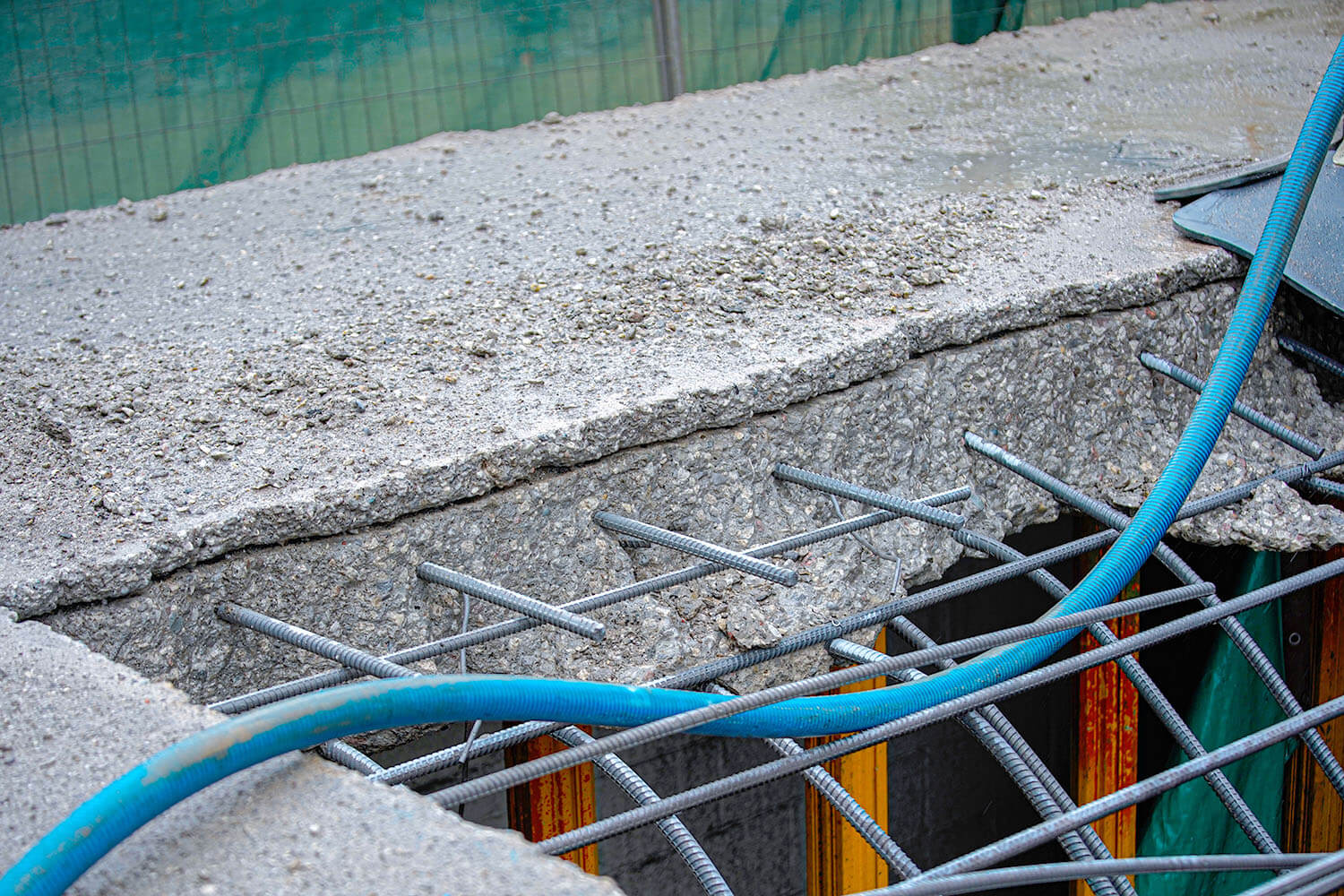
By using high-pressure water for removals there is no impact, or vibration transfer to the surrounding structure and embedded rebar is not damaged. Dust is not generated. This unique method of removals also removes corrosion from the exposed reinforcing steel.
An Environmentally Sustainable Solution
At Controlled Demolition, we provide a complete Hydro Demolition solution which has a low environmental impact and is environmentally sustainable. Our Hydro Demolition Environmental Program (HDEP) involves a mobile water treatment unit on site to collect, treat, and recycle waste water generated during the Hydro Demolition process.
Hydro Demolition – Frequently Asked Questions
Hydro demolition is one of the most precise and structurally safe methods for removing deteriorated concrete from bridges, tunnels, dams, and other mass concrete infrastructure. At Controlled Demolition Group, our hydro demolition systems are regularly deployed on infrastructure rehabilitation projects across Toronto, the Greater Toronto Area (GTA), and throughout Ontario.
The following questions address how hydro demolition works, when it should be used, and what engineers, project managers, and contractors should consider when selecting the method for infrastructure rehabilitation projects.
1. What is hydro demolition?
Hydro demolition—sometimes referred to as hydro blasting or hydro jetting—is a concrete removal method that uses ultra-high-pressure water (often up to 40,000 PSI) to selectively remove deteriorated or specified depths of concrete without mechanical impact tools.
At Controlled Demolition Group (CDG), we use hydro demolition to remove damaged concrete while preserving embedded structural steel and maintaining the integrity of surrounding structural elements. Because the process is non-percussive, it avoids vibration-related microcracking and protects critical infrastructure during rehabilitation projects across Ontario and the Greater Toronto Area (GTA).
2. Does hydro demolition damage rebar or embedded structural steel?
No. One of the primary advantages of hydro demolition, and a key reason CDG deploys it on infrastructure projects across Ontario, is its ability to preserve reinforcing steel. Hydro demolition removes concrete without cutting, bending, or micro-fracturing embedded reinforcing steel. The process removes concrete while leaving embedded steel intact and often cleaned of corrosion products. Unlike mechanical chipping methods, hydro demolition does not bend, nick, or weaken rebar, making it the preferred removal method for bridges, tunnels, dams, and other structurally critical infrastructure.
In many cases, hydro demolition also cleans corrosion and laitance from the rebar surface, improving bond conditions for repair materials and helping extend the service life of the structure.
3. Why is protecting embedded steel so important?
Reinforcing steel provides tensile strength in concrete structures. In bridges, dams, and tunnels, it carries load, resists cracking, and maintains structural stability. Damaging this reinforcement during demolition can compromise structural capacity and significantly increase repair costs.
For infrastructure owners across Toronto, the GTA, and Ontario, protecting reinforcement is essential. CDG prioritizes hydro demolition on rehabilitation projects because it preserves the structural steel while allowing precise removal of deteriorated concrete.
4. What types of structures benefit most from hydro demolition?
Hydro demolition is ideal for mass concrete infrastructure, including:
- Bridges and bridge decks
- Hydroelectric dams and spillways
- Tunnels and underground transit structures
- Parking garages
- Marine and waterfront structures
Across Ontario and the GTA, CDG frequently deploys hydro demolition in structurally sensitive environments where vibration or invasive demolition methods would introduce risk.
Because the process does not use impact tools, and is precisely controlled, it is particularly valuable in phased rehabilitation projects and operational facilities where maintaining structural integrity is critical. Explore how hydro demolition is used on bridges, dams, tunnels, and other critical infrastructure.
5. When should hydro demolition be chosen instead of traditional concrete removal methods?
Hydro demolition should be considered when a project requires precise concrete removal without damaging embedded structural elements or introducing vibration into the surrounding structure. At Controlled Demolition Group, hydro demolition is often selected for projects involving bridges, tunnels, hydroelectric facilities, and other mass concrete infrastructure where protecting reinforcing steel and maintaining structural integrity is critical.
It is particularly advantageous when:
- Reinforcing steel must remain intact
- Structural vibration must be minimized
- Dust and silica exposure must be controlled
- Repairs require a strong bond surface for new concrete
- Work is being performed in sensitive or operational environments
For infrastructure owners and contractors across Toronto, the GTA, and Ontario, hydro demolition provides a controlled removal method that protects the structure while preparing it for long-lasting rehabilitation.
6. Is hydro demolition better than jackhammering?
For structural rehabilitation, hydro demolition is often the superior method. Jackhammering introduces vibration, potential microcracking, and risk of damage to embedded reinforcement steel.
Hydro demolition eliminates these issues and produces a superior roughened surface profile that enhances bonding of new repair materials. The result is a higher-quality, longer-lasting repair on infrastructure projects throughout Toronto and Ontario.
7. Does hydro demolition create dust or silica exposure?
No. Because hydro demolition uses water rather than mechanical abrasion, it virtually eliminates airborne dust and respirable silica exposure.
For projects in urban environments like Toronto and the Greater Toronto Area (GTA), this helps improve worker safety and reduce disruption to surrounding communities. It also minimizes dust control requirements compared to traditional demolition methods.
Hydro demolition is also well suited for environmentally sensitive areas, such as hydroelectric dam sites and waterways where environmental protection is critical. At Controlled Demolition Group, the use of water-based removal combined with water capture and treatment systems helps support responsible demolition practices in locations where protecting surrounding ecosystems and water quality is a priority.
8. How precise is hydro demolition?
Hydro demolition can be calibrated to remove concrete to a specific depth while preserving sound material beneath. At CDG, robotic hydro demolition systems allow us to deliver consistent, controlled removal across large areas, particularly important for bridge deck rehabilitation and other infrastructure repairs across Ontario’s transportation and power generation networks.
9. What happens to the water used during hydro demolition?
Controlled Demolition Group incorporates water capture, filtration, and recycling systems into hydro demolition operations whenever project conditions allow. Water generated during hydro demolition can be captured, filtered, and treated using on-site water management systems. Suspended solids are removed, and water can often be recycled back into the process. This supports environmental compliance and reduces freshwater demand on infrastructure projects across Ontario and the GTA.
10. Is hydro demolition suitable for confined or sensitive environments?
Yes. Hydro demolition is frequently used in confined or operational environments where traditional demolition methods would create excessive vibration, dust, or structural risk. Because the method reduces vibration, dust, and noise compared to traditional demolition, it is particularly effective in operational or high-occupancy environments where disruption must be minimized.
11. How does hydro demolition improve long-term repair performance?
Hydro demolition produces a clean, roughened concrete surface free from micro-cracking and contamination. This creates an ideal bonding substrate for repair mortars, overlays, and structural strengthening systems. By preserving reinforcement and properly preparing the concrete surface, CDG helps extend the service life of infrastructure across Toronto, the GTA, and Ontario.
12. How does hydro demolition improve worker safety compared to traditional impact tools?
Hydro demolition reduces many common injury risks associated with jackhammers and breakers, including prolonged vibration exposure, repetitive strain, tool kickback, excessive noise, and airborne silica dust. Because the method is non-percussive and robotic, it can also keep operators farther from active removal zones, improving overall site safety. Learn how hydro demolition protects worker safety on Ontario job sites.
13. Is hydro demolition an environmentally sustainable concrete removal method?
Yes. Hydro demolition can support sustainability through water capture, filtration, and recycling systems that reduce freshwater demand and limit discharge. It also removes concrete more precisely, which often means less over-removal and less new concrete required for reinstatement, lowering material waste and reducing embodied carbon associated with new concrete production. Learn how hydro demolition supports sustainable infrastructure repair through precision removal and water recycling.
14. How long does a hydro demolition project typically take?
Project timelines depend on several factors including removal depth, surface area, site access, and environmental controls. Because hydro demolition systems can remove concrete quickly and consistently, many projects can be completed faster than traditional mechanical removal methods. At Controlled Demolition Group, we work closely with project engineers and general contractors to develop efficient schedules that minimize disruption to infrastructure operations.
15. Do you provide hydro demolition services in the GTA and across Ontario?
Yes. Controlled Demolition Group provides hydro demolition services throughout Toronto, the Greater Toronto Area (GTA), and across Ontario. Our teams support infrastructure rehabilitation projects including bridges, tunnels, power generation facilities, parking structures, and other mass concrete structures. We work with general contractors, municipalities, utilities, and infrastructure owners across the province.
16. Can hydro demolition be performed while a structure is still in use?
In many cases, yes. Because hydro demolition produces no vibration and eliminates airborne dust, it can often be performed while portions of a structure remain operational. This makes it particularly valuable for bridge rehabilitation, power generation facilities, and urban infrastructure projects in the GTA, where maintaining service during construction is critical.
17. What should engineers and contractors look for when selecting a hydro demolition contractor?
Hydro demolition is a highly specialized concrete removal method that requires experienced operators, purpose-built equipment, and proper water management systems. When evaluating a contractor, engineers and project managers should consider several key factors.
First, the contractor should have dedicated hydro demolition equipment and trained operators, not simply subcontracted or occasional capability. Consistent experience with robotic hydro demolition systems helps ensure removal depth, productivity, and structural protection are properly controlled.
Second, the contractor should demonstrate experience working on complex infrastructure projects such as bridges, power generation facilities, tunnels, or other mass concrete structures where precision removal is critical.
Third, proper water capture, filtration, and environmental controls should be part of the contractor’s methodology, particularly when working in environmentally sensitive areas such as waterways or hydroelectric facilities.
At Controlled Demolition Group, hydro demolition is a core service supported by specialized equipment, experienced crews, and water management systems designed for infrastructure rehabilitation projects across Toronto, the GTA, and Ontario. Our focus is always on delivering controlled concrete removal while protecting structural elements and maintaining safe, compliant job sites.
18. How deep can hydro demolition remove concrete?
Hydro demolition can be calibrated to remove concrete at very precise depths, ranging from shallow surface preparation to full-depth removal depending on the project requirements. For many infrastructure rehabilitation projects, hydro demolition is used to remove partial depths of deteriorated concrete while preserving sound concrete and embedded reinforcing steel beneath. This controlled removal is particularly important in bridge deck repairs, dam rehabilitation, and tunnel infrastructure where maintaining structural integrity is critical.
However, hydro demolition systems can also be configured for deeper removal or full-depth concrete removal when required. The removal depth is typically determined by the water pressure, nozzle configuration, travel speed of the robotic system, and the condition of the concrete.
At Controlled Demolition Group, our robotic hydro demolition systems allow us to precisely control removal depth across large surface areas. This ensures that only the concrete that needs to be removed is removed, protecting structural steel and minimizing unnecessary material removal on infrastructure projects throughout Toronto, the GTA, and across Ontario.
19. Why work with Ontario’s Hydro Demolition Experts
Controlled Demolition Group provides specialized hydro demolition services for infrastructure and structural rehabilitation projects throughout Toronto, the GTA, and across Ontario. Our team works with general contractors, municipalities, utilities, and infrastructure owners to deliver precise concrete removal while protecting structural steel and maintaining the integrity of surrounding structures.
If you are planning a project that may benefit from hydro demolition, our team can help evaluate whether the method is the right solution for your scope. Start your project today and reach out to our team for a consultation!
Contact Us
Get a Quote For Your Project
Planning a complex infrastructure demolition or concrete rehabilitation scope? Contact CDGI to discuss how our robotic demolition, hydro demolition, concrete cutting, water treatment, and safety planning capabilities may support safe, controlled execution.