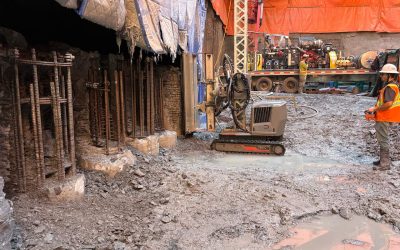
Worker safety has always been a central concern in demolition and construction. Traditional concrete removal methods such as jackhammers and pneumatic breakers expose workers to several well-known hazards, including vibration-related injuries, airborne silica dust, and prolonged noise exposure. As infrastructure rehabilitation projects become more complex across Toronto, the Greater Toronto Area (GTA), and throughout Ontario, contractors and project owners are increasingly seeking methods that reduce these risks.
Hydro demolition offers a fundamentally different approach. By using ultra-high-pressure water instead of mechanical impact tools, the method allows deteriorated concrete to be removed while reducing many of the occupational hazards associated with traditional demolition. At Controlled Demolition Group (CDG), hydro demolition is frequently used on infrastructure projects where safety, precision, and structural protection are critical.
The Hidden Risks of Jackhammers and Impact Tools
Jackhammers and pneumatic breakers remain common tools for concrete removal, but their prolonged use can expose workers to several occupational hazards. These include:
- Continuous vibration transmitted through handheld tools.
- Airborne crystalline silica generated during mechanical breaking.
- High noise levels that can contribute to hearing damage.
- Repetitive strain and fatigue from prolonged tool handling.
In environments such as bridge rehabilitation, tunnels, and industrial facilities, these hazards can accumulate quickly, particularly when demolition work must be performed for extended periods.
Understanding Hand-Arm Vibration Syndrome (HAVS)
One of the most serious risks associated with prolonged use of jackhammers and other high-vibration tools is Hand-Arm Vibration Syndrome (HAVS). HAVS is a medical condition caused by long-term exposure to vibration transmitted through handheld equipment. Over time, vibration damages blood vessels, nerves, and joints in the hands and arms.
Common symptoms include:
- Numbness or tingling in the fingers.
- Reduced grip strength.
- Loss of dexterity.
- Whitening or blanching of the fingers (often referred to as “vibration white finger”).
- Chronic pain and nerve damage.
In advanced cases, the condition can become irreversible, permanently affecting a worker’s ability to perform manual tasks. Because the risk develops gradually, prevention is the most effective protection. Reducing or eliminating prolonged exposure to high-vibration tools is a key part of modern construction safety strategies.
Further Reading: To learn more about the symptoms and prevention of Hand-Arm Vibration Syndrome (HAVS) in the workplace, visit the Government of Ontario’s official safety guide.
Why Vibration Exposure Is a Real Jobsite Challenge
On many demolition projects, jackhammers and pneumatic breakers are used continuously for hours at a time. Workers may rotate tasks, but prolonged vibration exposure can still accumulate throughout a shift. Over weeks or months of repetitive demolition work, that exposure builds. Even when proper protective equipment and work practices are followed, sustained vibration can still affect long-term worker health.
For safety managers and project supervisors, this is one reason the industry has increasingly looked toward mechanized demolition methods that reduce reliance on handheld impact tools. Hydro demolition represents one of the most effective ways to address this issue by replacing vibration-based removal with a controlled, non-percussive method.
How Hydro Demolition Reduces Vibration Exposure
Hydro demolition removes concrete using ultra-high-pressure water rather than mechanical force. Because the method is non-percussive, it eliminates the vibration exposure associated with jackhammers and pneumatic breakers.
Instead of holding vibrating tools for extended periods, operators control robotic hydro demolition equipment that performs the removal process.
This significantly reduces the risk of vibration-related injuries while maintaining productivity on large concrete removal projects. For contractors and infrastructure owners, this shift from handheld impact tools to controlled mechanical systems represents a major improvement in worker protection.
Controlling Silica Dust Exposure
Another major safety concern in concrete demolition is respirable crystalline silica. Mechanical breaking, cutting, or grinding of concrete releases fine silica dust into the air. Prolonged exposure to respirable silica particles can lead to serious health conditions, including silicosis, lung disease, and increased risk of respiratory complications.
In Ontario, Regulation 833 under the Occupational Health and Safety Act (OHSA) establishes exposure limits and requirements for controlling airborne silica dust in workplaces. Because hydro demolition uses water as the primary removal medium, it virtually eliminates airborne dust generation during concrete removal. This helps improve air quality on demolition sites and supports compliance with occupational health and safety requirements.
Increasing Distance Between Workers and the Hazard
Another safety advantage of hydro demolition is the ability to increase distance between workers and active demolition areas. Robotic hydro demolition systems allow operators to control the removal process from a safe location rather than standing directly beside the demolition zone. This reduces exposure to falling debris, unstable surfaces, and confined-space hazards that can arise during structural rehabilitation work. The result is a safer working environment without sacrificing efficiency or performance.
Safer Concrete Removal for Modern Infrastructure Projects
As infrastructure rehabilitation projects continue to grow across Ontario, contractors and project owners are increasingly prioritizing demolition methods that reduce worker exposure to vibration, dust, and other occupational hazards. Hydro demolition provides a safer alternative to traditional jackhammers and impact tools while also delivering precise, controlled concrete removal.
At Controlled Demolition Group, we deploy hydro demolition systems on bridge rehabilitation, hydroelectric facilities, tunnels, and other critical infrastructure projects across Toronto, the GTA, and throughout Ontario. If you are planning a project where worker safety and controlled concrete removal are priorities, our team can help determine whether hydro demolition is the right solution for your scope.
Ontario.ca: Hand-arm vibration guidelines and safety
Government of Ontario: Regulation 833: Control of Exposure to Biological or Chemical Agents